
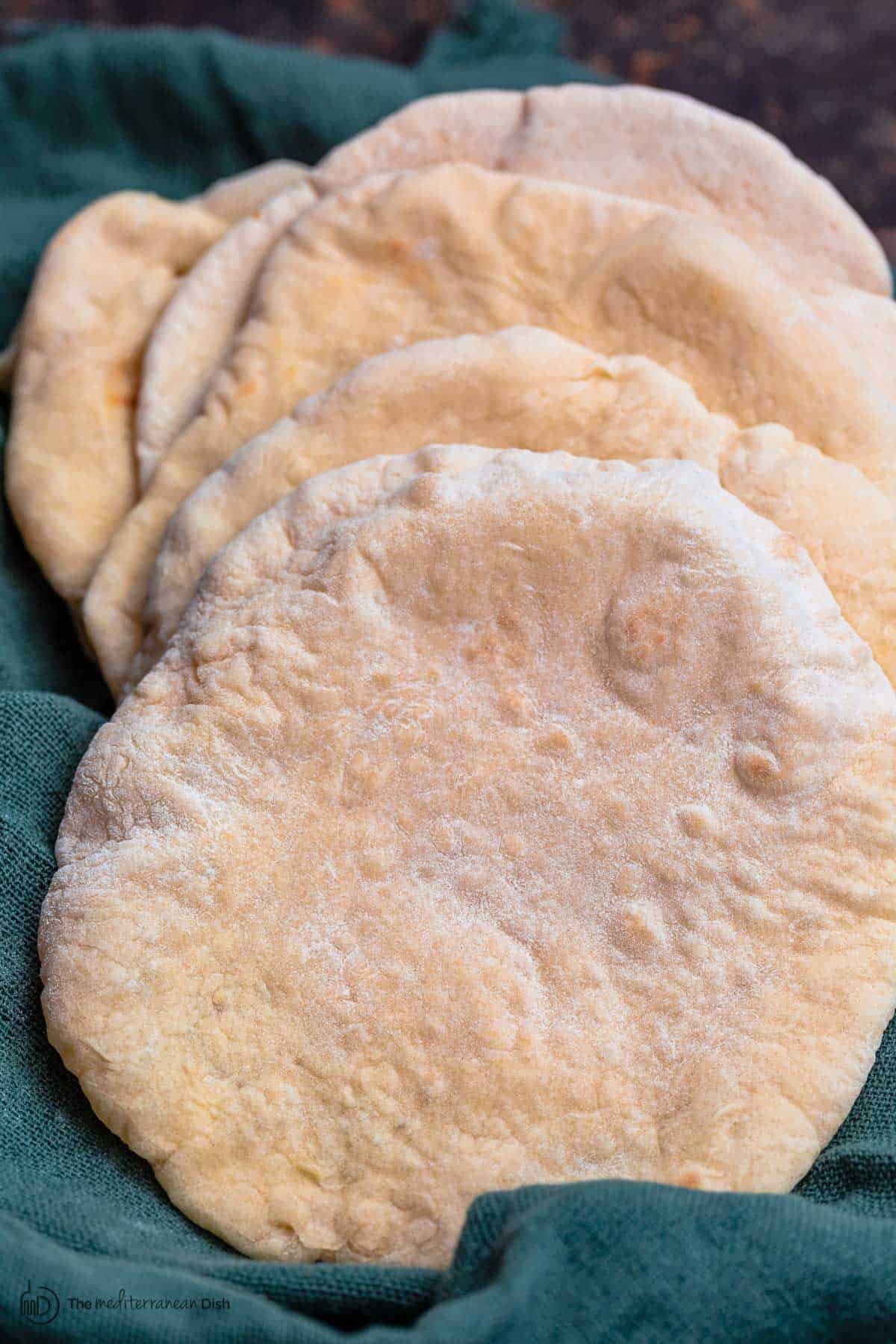
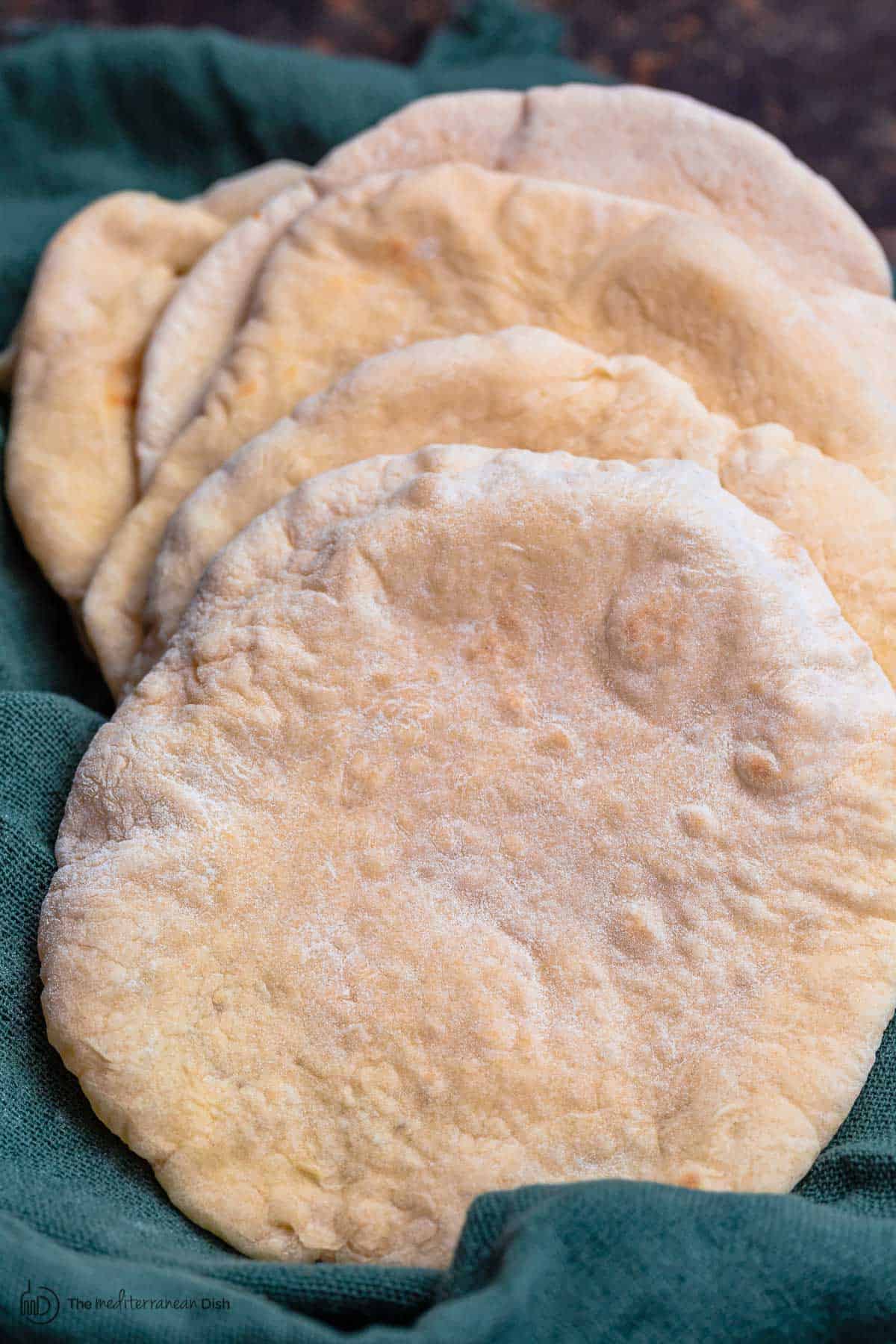
Many ways to use pita bread!
Whether we’re talking falafel, shawarma, hummus or even deli meat, pita pockets are my go-to.
In fact, a basket of warm pita is almost always on the dinner table next to anything from soups and stews to saucy meatballs requiring something to sop up the delicious goodness.
I’ve turned pita into chips and churro chips! And when the kids need a good snack to hold them over until a late dinner, I serve up some pita with a little dish of za’atar and some extra virgin olive oil for dipping.
Is it worth it to make your own homemade pita bread?
YES! As someone who grew up on authentic fresh pita bread from Egyptian bakeries, I can tell you this: pita bread we buy at grocery stores here in the U.S. is simply not the same. Like store-bought sandwich bread, store-bought pita has typically been sitting on the shelf for a few days.
Don’t get me wrong, I have bought pita at the store many times. It must be warmed up and used pretty quickly.
But what I’m after here is: Fresh. Warm. Fragrant. Perfectly puffy pita bread. Making it takes me back to the streets of Egypt where I grew up.
Making pita bread at home is straightforward and takes just a few ingredients you probably already have on hand.
This recipe will make 8 pitas. And you can bake them in the oven or cook them stovetop in a hot skillet.
Ingredients
- Water
- Yeast
- Pinch sugar
- All-purpose flour (or a combination of all-purpose flour and whole wheat flour)
- Kosher salt (I use Diamond Crystal kosher salt)
- Extra virgin olive oil (I used Private Reserve Greek extra virgin olive oil)
Do I need a stand mixer to make pita bread?
No! In fact, I prefer to knead the dough by hand for my pita bread. You will not be doing too much kneading, and the result is almost better than using a stand mixer. Here’s all the equipment you need to make this pita bread recipe:
- Large mixing bowl like this one (affiliate link)
- Wooden spoon or anything to stir the dough
- A rolling pin (affiliate link) to flatten the pita like
How to Make Pita Bread: Step-by-Step
Step 1: Make sponge
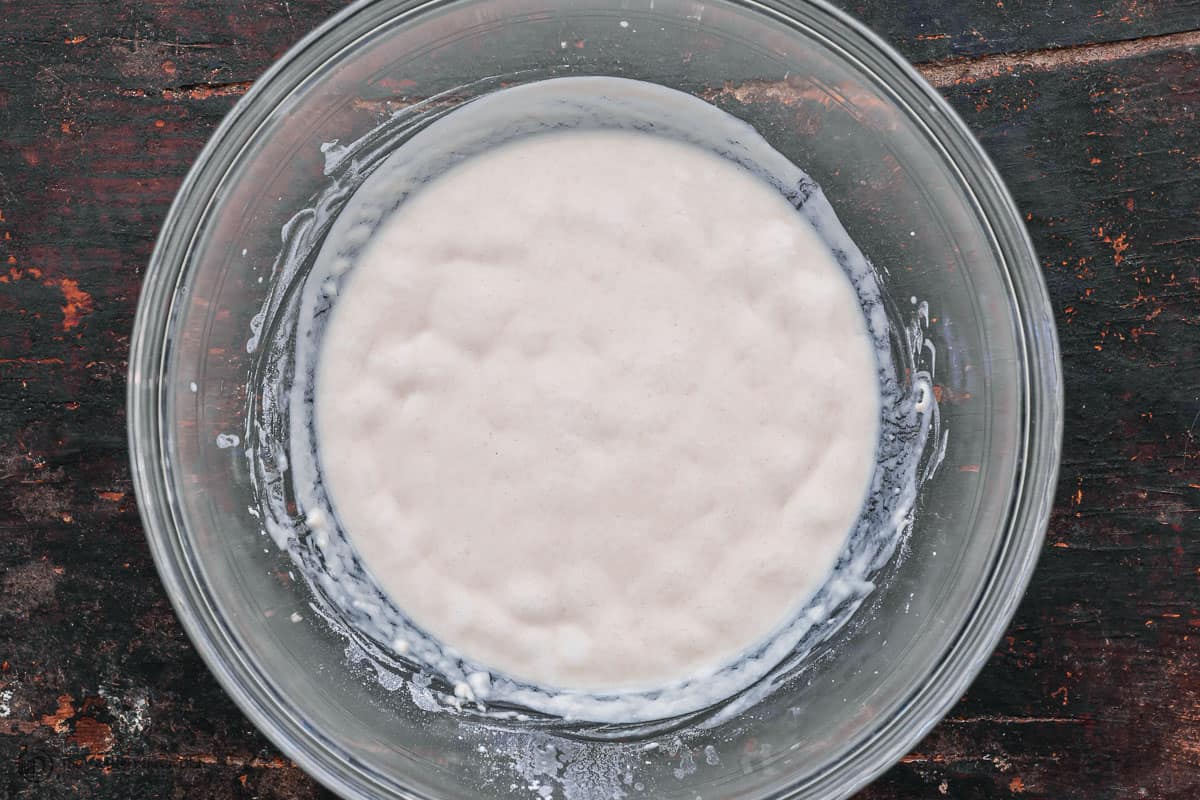
Combine 1 cup lukewarm water in a large mixing bowl with yeast and sugar. Stir until dissolved. Add 1/2 cup flour and whisk together. Place the mixing bowl in a warm (not hot) place, uncovered. Wait about 15 minutes or until mixture is frothy and bubbling a bit
Tip: If you don’t see some bubbles, your yeast is dead. Start over with new yeast.
Step 2: Form the pita dough
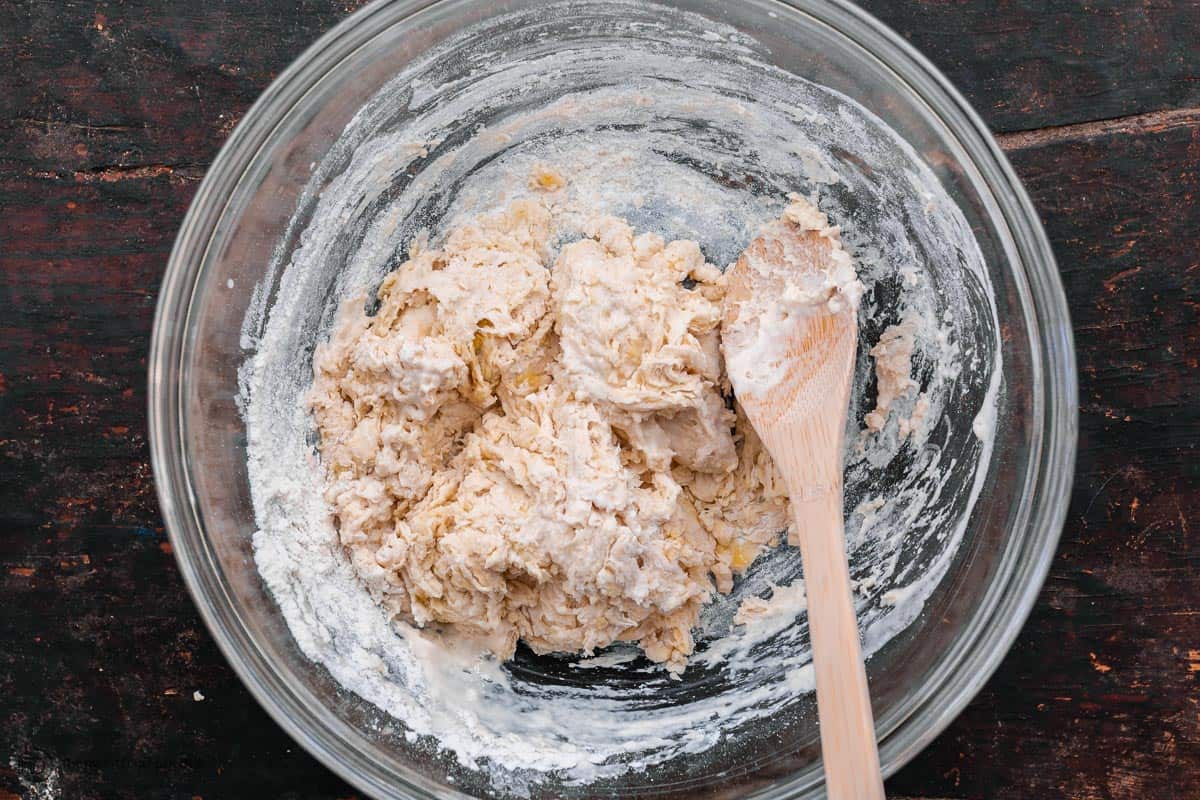
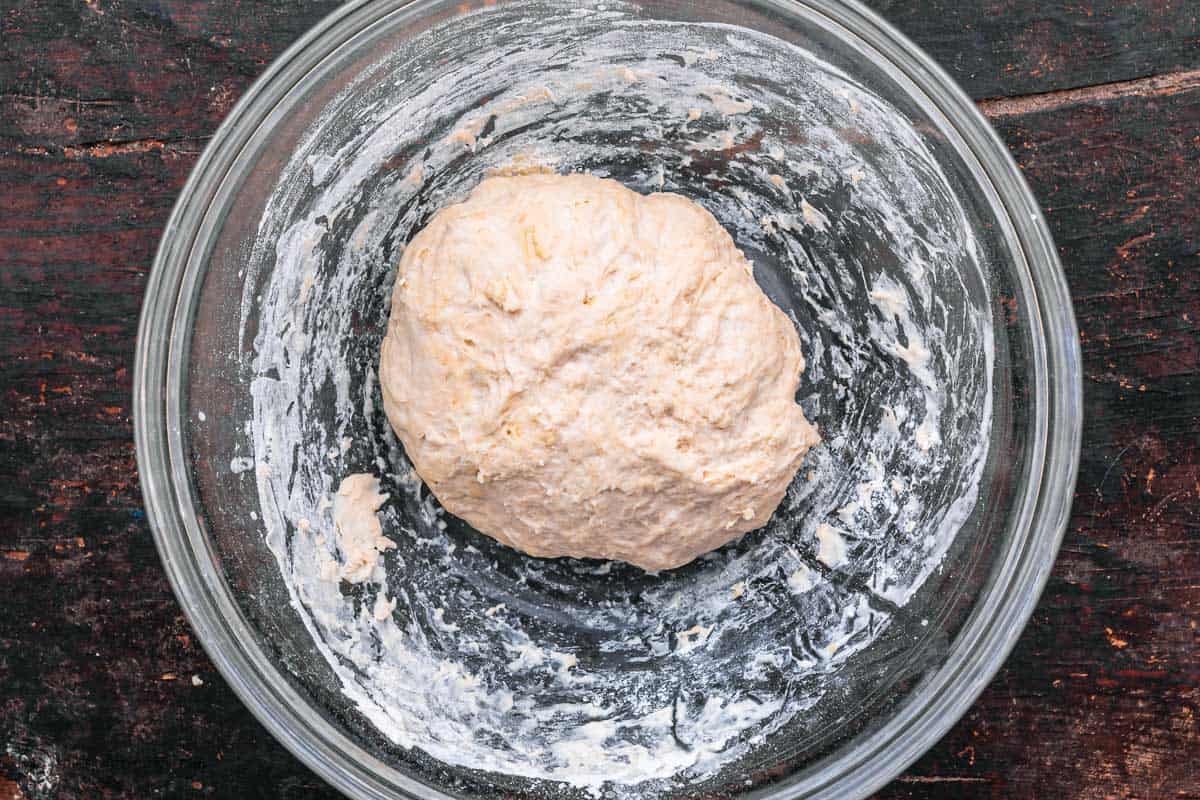
Now add salt, olive oil, and the remaining flour (keep about 1/2 cup of the flour for dusting later). Stir until mixture forms a shaggy mass.
(What’s a shaggy mass? Basically, at this point, the dough has little to no gluten development and just looks like a sticky mess and you can easily pull bits off).
Dust with a little flour, then knead the mixture inside the bowl for about 1 minute incorporating any stray bits.
Step: 3 Knead the dough
Dust a clean working surface with just a little bit of flour. Knead lightly for 2 minutes or so until smooth. Cover and let the dough rest for 10 minutes, then knead again for a couple more minutes. The dough should be soft and a little bit moist, you can help it with a little dusting flour, but try not to add too much.
Step: 4 Let the pita dough rise
Clean the mixing bowl and give it a light coating of extra virgin olive oil. Put the dough back in the bowl and turn it a couple times just to coat it a bit with the olive oil.
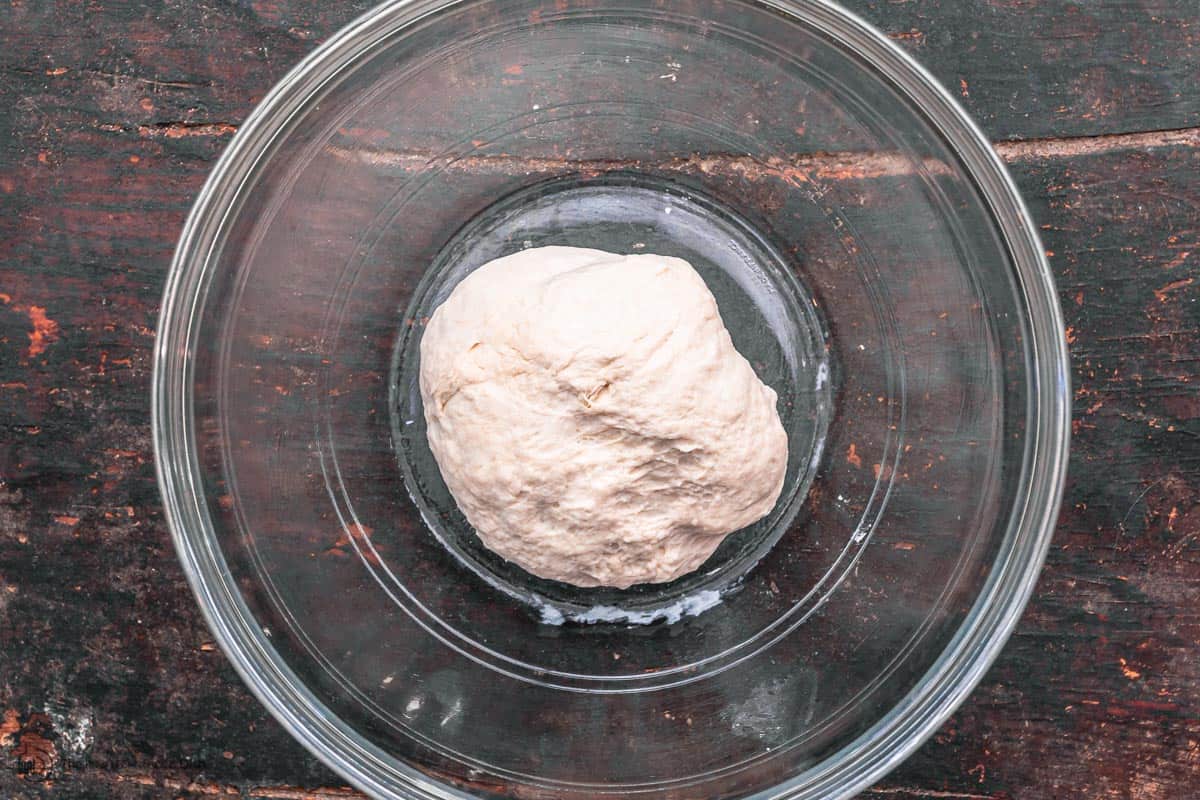
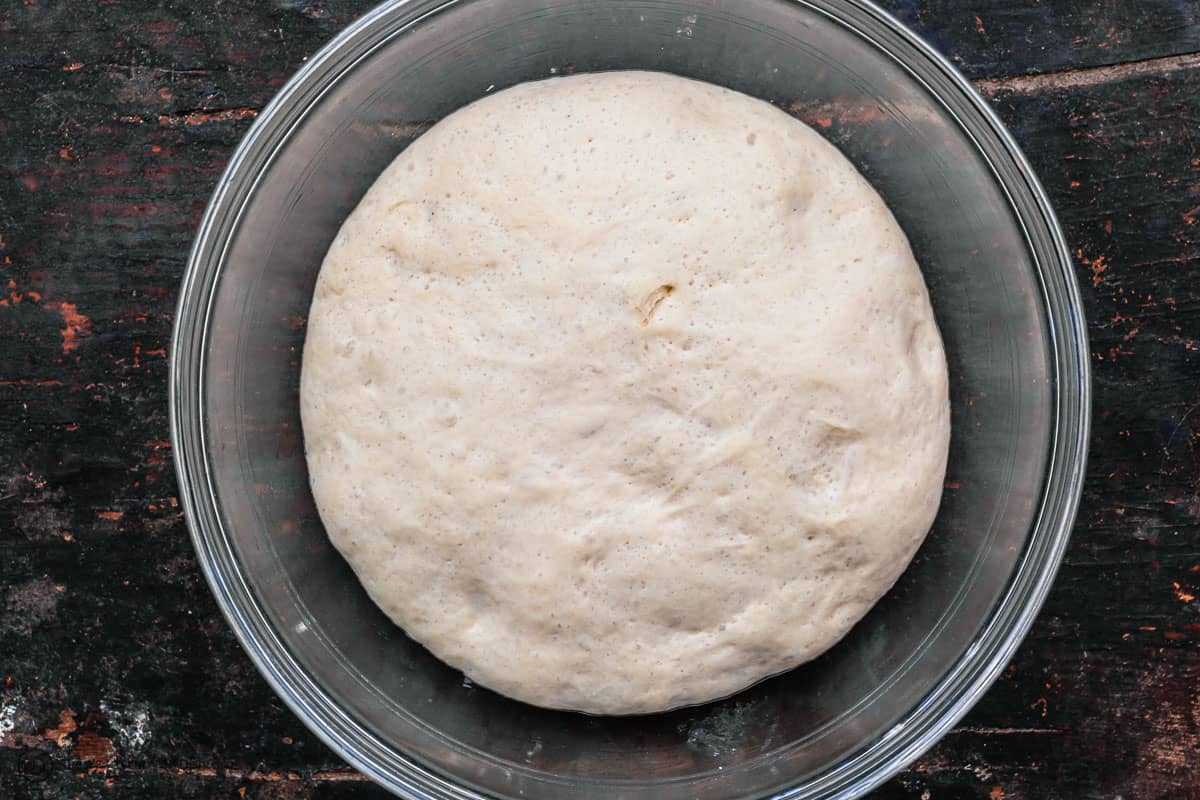
Cover the mixing bowl tightly with plastic wrap, then cover it with a kitchen towel. Put the bowl in a warm (not hot) place. Leave it for 1 hour or until the dough rises to double its size.
Step 5: Divide the dough
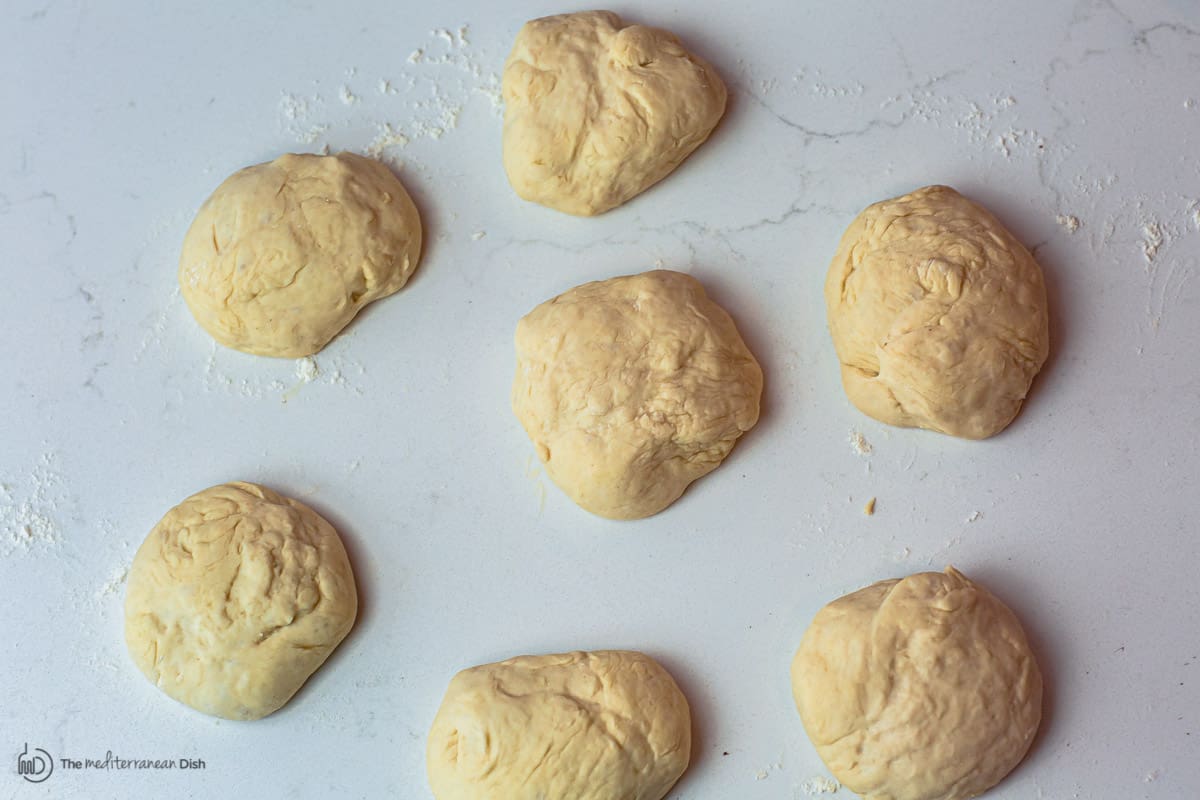
Gently deflate the dough and place it on a clean work surface. Divide the dough into 7 to 8 equal pieces and shape them into balls. Cover with a towel and leave them for 10 minutes or so.
CONTINUE READING IN THE NEXT PAGE