
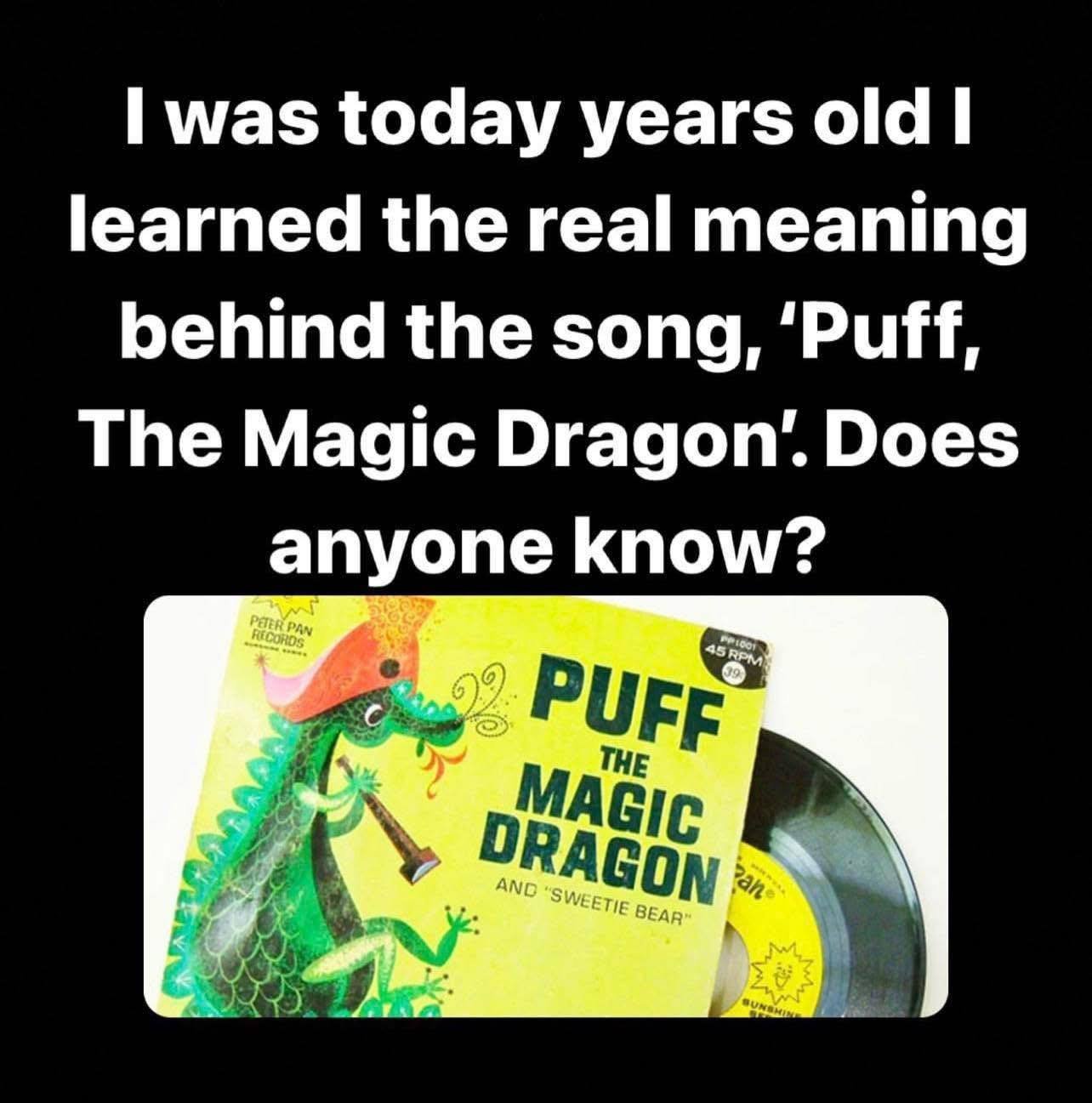
The real meaning behind “Puff, the Magic Dragon” is much more emotional than many people first think — and it’s not about drugs, despite long-running rumors.
The Song Itself
Puff, the Magic Dragon was written by Peter Yarrow and Leonard Lipton, and made famous by the folk group Peter, Paul and Mary in 1963.
—
The True Meaning: Loss of Childhood
The song is about:
Childhood imagination
Innocence
Growing up
The sadness of leaving fantasy behind
In the lyrics, Puff is a magical dragon who plays with a little boy named Jackie Paper. They go on adventures together in a land called Honah Lee. But as Jackie grows older, he stops visiting Puff.
That moment — when Jackie no longer comes to play — symbolizes the painful but natural transition from childhood to adulthood.
The most important line reflects this theme:
> “Dragons live forever, but not so little boys.”
It means:
Imagination (Puff) is timeless
Childhood (Jackie) is temporary
—
The Drug Rumor (Not True)
In the 1960s and 70s, some people claimed the song was about marijuana because:
“Puff” could mean smoking
“Dragon” could refer to smoke
“Paper” could mean rolling paper
However, the writers repeatedly denied this. Peter Yarrow explained that the song was written before those drug slang meanings were common and was purely about childhood innocence.
There’s no credible evidence it was intended as a drug song.
—
❤️ Why It Still Resonates
The song feels nostalgic because many people relate to:
Growing up
Losing that sense of wonder
Realizing childhood can’t come back
That bittersweet feeling is what makes the song powerful — especially for adults listening back.
—
If you’d like, I can also break down the symbolism of “Honah Lee” or explain why this song became controversial in the 60s.