
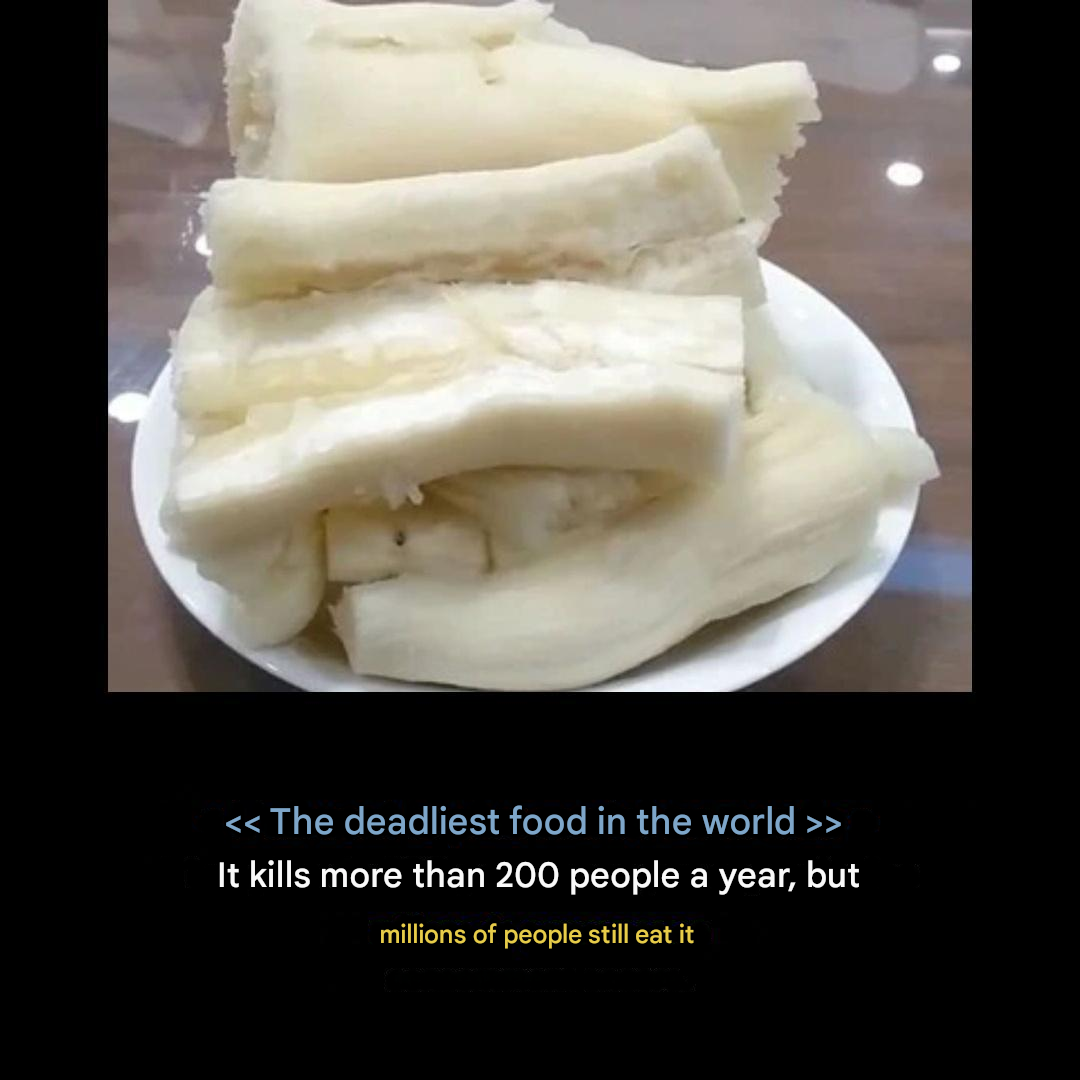
This is cassava, a plant and staple food for millions of people around the world. Each year, more than 500 million people consume it, and hundreds of millions of tons of cassava are produced in different regions of the world. Native to South America, cassava is a valuable food source, but it also poses serious risks: its stems, peels, and leaves contain toxins that can produce hydrogen cyanide, making it potentially fatal if improperly processed.
The World Health Organization (WHO) reports that approximately 200 people die each year from improperly cooking cassava, earning it the infamous title of “the world’s deadliest food.”
The WHO explains: “Cassava tubers contain varying amounts of cyanogenic glycosides, which act as a defense against animals and insects. When these substances are not properly processed, cassava can release cyanide, resulting in high dietary exposure to cyanide.”
This danger is particularly great during times of famine and military conflict. Cyanide poisoning from cassava has been linked to several serious illnesses, including konzo.
CONTINUE READING IN THE NEXT PAGE