
️Food and drinks
Diet also has an impact. Salty, spicy, or very acidic foods consumed in the evening activate salivation. Alcohol and sugary drinks further enhance this effect. Even a small change in the evening menu can reduce nighttime discomfort.
Stress and fatigue
Mental stress and chronic fatigue are often underestimated. When the body is under stress, the autonomic nervous system can increase saliva production. Restless sleep and emotional exhaustion increase the risk of waking up with a wet pillow.
When can saliva signal a health problem?
In some cases, nighttime drooling may be related to an underlying medical condition. In people with gastroesophageal reflux disease (GERD), the body produces more saliva to neutralize stomach acid that flows back up into the esophagus.
Neurological conditions can also play a role. Facial paralysis, some forms of Parkinson’s disease, or deep sleep disorders can lead to impaired salivation control.
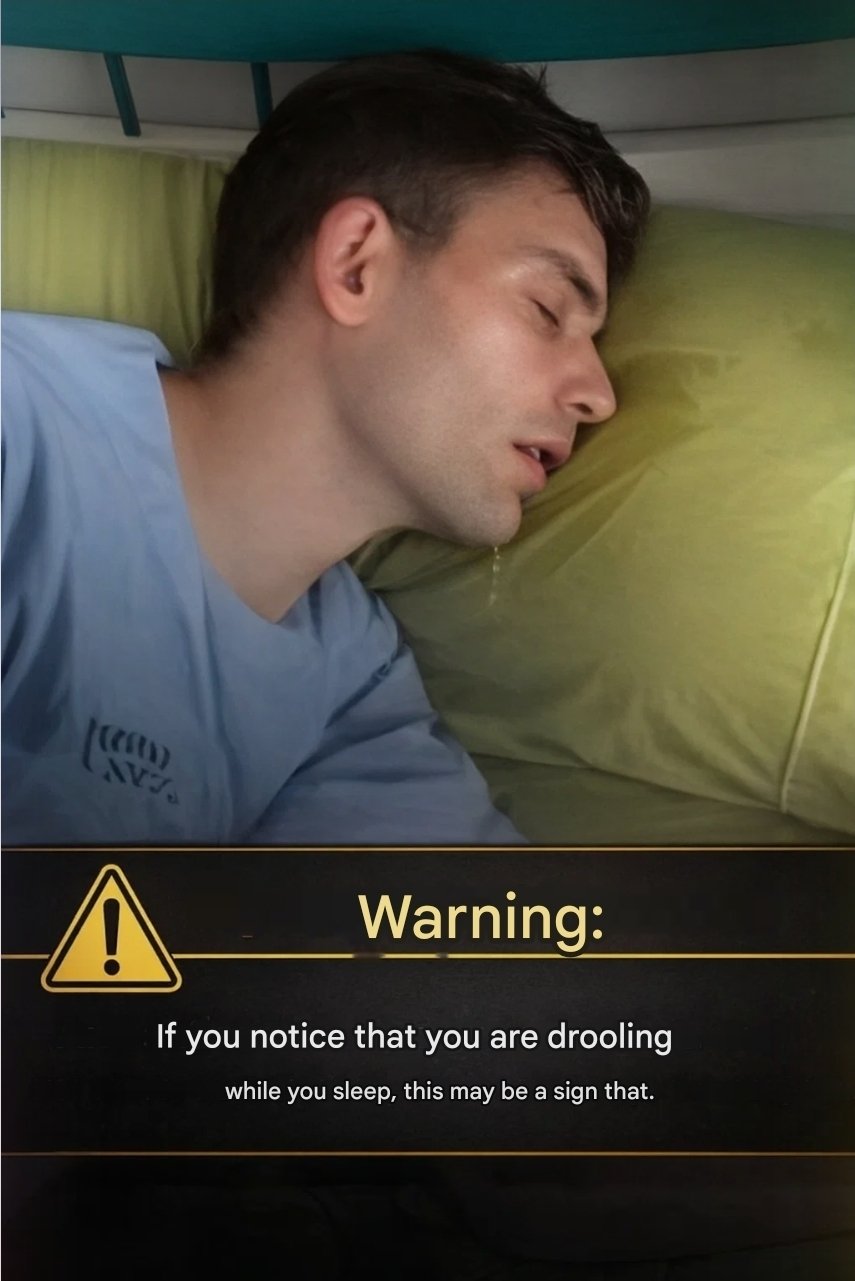
Drooling itself does not automatically indicate a serious problem. However, if it is frequent, profuse, or accompanied by pain, constant fatigue, heartburn, or speech problems, it is advisable to seek medical advice.
How to reduce drooling and improve sleep?
✔Maintain good hydration during the day
✔Avoid heavy and spicy food before bed
✔Limit alcohol and sugary drinks in the evening
✔Maintain a moderate temperature in the bedroom
✔Use a suitable pillow that supports correct posture
✔If you have frequent nasal congestion, pay attention to the cause
CONTINUE READING IN THE NEXT PAGE